What is Lohri? — About Lohri Festival
Lohri is a traditional winter harvest festival celebrated mainly in the northern regions of the Indian subcontinent, especially Punjab, Haryana, Himachal Pradesh, and parts of Jammu. About Lohri Festival, it is best understood as a celebration of nature, agriculture, and community life. Lohri marks the end of the coldest days of winter and the gradual return of longer, warmer days. For farming communities, it symbolizes gratitude for the harvest and hope for prosperity in the coming agricultural season.
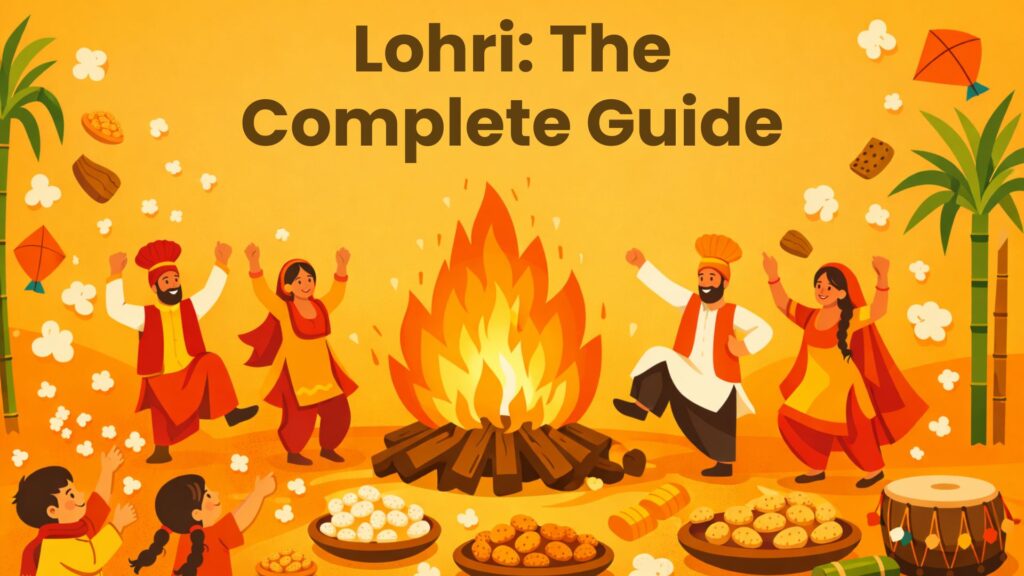
At its heart, Lohri is a people’s festival rooted in folk culture rather than formal religious rituals. Families and neighbors gather around a bonfire, which serves as the central symbol of Lohri. The fire represents warmth, renewal, and the sun’s increasing strength. Offerings such as peanuts, popcorn, rewri, sesame seeds, and jaggery are thrown into the flames as a gesture of thanks to nature. Folk songs, clapping, and traditional dances like bhangra and gidda create an atmosphere of joy and togetherness, making Lohri both a cultural and social celebration.

When is Lohri Celebrated? (Date and Lunar/Solar Significance)
Lohri is celebrated every year on 13 January, with occasional variation to 14 January depending on the solar calendar. Unlike many Indian festivals that follow the lunar calendar, Lohri is linked to the solar calendar. It falls just before Makar Sankranti, marking the sun’s transition into the zodiac sign Capricorn (Makara). This solar movement, known as Uttarayan, is considered highly auspicious because it signifies longer days and increased sunlight.
From an agricultural perspective, the timing of Lohri is deeply meaningful. It coincides with the end of the winter sowing season and the anticipation of the rabi crop harvest. Farmers view this period as a turning point when hard work in the fields begins to show promise. This seasonal importance explains why, about Lohri festival, themes of fertility, abundance, and renewal are central to its celebrations.
Historical Origins & Legends
Agrarian Roots of Lohri
The origins of the lohri festival are deeply tied to agrarian life in the Punjab region, where agriculture has shaped culture and traditions for centuries. Lohri emerged as a seasonal celebration linked to the winter crop cycle, especially the rabi crops such as wheat and barley. As winter reaches its peak in January, farmers traditionally pause to acknowledge the hard labor already invested in the fields and to express gratitude for nature’s support.

In ancient agrarian societies, fire held special importance as a source of warmth, protection, and renewal. The Lohri bonfire is believed to symbolize the sun’s energy, which begins to grow stronger after mid-January. Communities gathered around fire not only to stay warm but also to celebrate survival through harsh winters. Over time, these practical gatherings evolved into ritualized celebrations, giving shape to what we now recognize as the lohri festival—a joyful blend of farming rhythms, seasonal change, and communal bonding.
The Dulla Bhatti Legend and Folk Traditions
One of the most enduring legends associated with the lohri festival is that of Dulla Bhatti, a Punjabi folk hero from the Mughal era. He is remembered as a symbol of courage and generosity, often compared to a “Robin Hood” figure of Punjab. According to folklore, he protected poor villagers from oppression and helped young girls from impoverished families by arranging their marriages and providing dowries.
Traditional folk songs frequently mention Dulla Bhatti, especially during children’s rounds of singing from house to house. These songs keep his memory alive and reflect values of bravery, social justice, and compassion. Beyond this legend, local folklore also includes stories linked to fertility, abundance, and reverence for nature, reinforcing the festival’s deep roots in rural life and oral storytelling traditions.
Evolution of Lohri Through the Centuries
Over the centuries, the lohri festival has evolved while retaining its core spirit. What began as a rural, agrarian observance gradually spread to towns and cities as populations shifted and lifestyles changed. While earlier celebrations were closely tied to farming communities, the modern festival is now enjoyed by people from diverse professions and backgrounds, including those far removed from agriculture.
Despite these changes, the essence of the celebration has remained intact. The bonfire, folk music, traditional foods, and communal gatherings continue to define the occasion. In contemporary times, it has also gained a global presence through the Punjabi diaspora, adapting to new environments while preserving its historical narratives. This evolution highlights how the festival has successfully bridged the past and present, transforming from a seasonal agrarian ritual into a widely cherished cultural event without losing its legendary and historical roots.
Traditional Rituals & Customs
The Bonfire Ritual (Meaning & Procedure)
The bonfire is the heart of every lohri celebration, symbolizing warmth, renewal, and the sun’s growing strength as winter begins to recede. Traditionally lit at sunset on Lohri evening, the fire represents gratitude to nature and hope for prosperity. Families and neighbors gather in open spaces—courtyards, village squares, or community grounds—to prepare the bonfire using wood, twigs, and dried cow dung cakes.

The ritual begins with circumambulating the fire (parikrama), during which people toss offerings into the flames while offering prayers for good harvests, health, and happiness. Elders often lead the ceremony, invoking blessings for the household, especially if the year marks a birth or marriage in the family. Clapping, singing, and joyful shouts accompany the ritual, transforming the bonfire from a symbolic act into a shared community experience that anchors the lohri celebration.
Offerings (Gur, Rewri, Peanuts, Popcorn)
Offerings are an essential part of Lohri and reflect the agricultural and seasonal roots of the festival. Common items include gur (jaggery), rewri (sesame and sugar sweets), peanuts, and popcorn—foods harvested in winter and believed to provide warmth and energy. Each offering carries symbolic meaning: sesame and jaggery represent abundance and sweetness in life, while peanuts and popcorn reflect the fruits of the land.
During the celebration, these items are first offered to the bonfire as a gesture of thanksgiving to nature and the divine. Afterward, they are shared among family members, neighbors, and guests as prasad. This act of sharing reinforces values of generosity, equality, and togetherness, reminding participants that prosperity is best enjoyed when it is shared with the community.
Songs (Boliyan) and Children’s Rounds
Music and singing give Lohri its lively spirit. Traditional boliyan—short folk verses—are sung around the bonfire, often accompanied by rhythmic clapping and dancing. These songs celebrate bravery, folklore, seasonal change, and joy, with many verses recalling heroic figures and village life. Singing boliyan is not merely entertainment; it is a way of preserving oral history and cultural identity.
A unique and cherished custom of the celebration involves children going from house to house singing festive songs in the days leading up to the occasion. In return, they receive peanuts, sweets, popcorn, or small coins. This tradition encourages community bonding and teaches children the values of participation and cultural pride. Their cheerful voices and laughter add a special charm to the festivities, ensuring that the customs are passed down from one generation to the next.
Music, Dance & Folk Songs
Bhangra and Gidda at Lohri
Music and dance are the soul of Lohri, bringing energy and joy to the celebrations. Bhangra, traditionally performed by men, and Gidda, performed by women, are the most prominent dance forms associated with Lohri. Set to the beat of the dhol, these dances express happiness, strength, and gratitude for nature’s blessings. During Lohri evening, as people gather around the bonfire, rhythmic movements, loud beats, and enthusiastic clapping create an atmosphere of collective celebration.

The lyrics sung during these dances often include cheerful greetings and celebratory phrases, making it common to hear people wish one another happy lohri Punjabi style, blending dance with verbal expressions of joy. These performances are not about perfection but participation, reflecting the inclusive spirit of Lohri where everyone—young or old—is encouraged to join.
Traditional Lohri Songs (Dulla Bhatti Lines)
Traditional Lohri songs are deeply rooted in Punjabi folklore and oral tradition. Among the most famous are songs that praise Dulla Bhatti, a legendary folk hero admired for his bravery and generosity. Lines such as “Sundar mundriye ho!” are instantly recognizable and are sung collectively, often led by elders or children.
These songs serve multiple purposes: they entertain, preserve history, and reinforce cultural values like courage and compassion. During singing sessions, people clap in rhythm while circling the bonfire, creating a powerful sense of unity. As verses conclude, celebratory calls and greetings are exchanged, naturally flowing into wishes of happy lohri Punjabi, reinforcing both cultural identity and festive cheer.
Modern Punjabi Lohri Tracks
With changing times, Lohri music has also evolved. Alongside traditional folk songs, modern Punjabi tracks have become a popular part of celebrations, especially in urban settings and among the younger generation. Contemporary artists blend folk rhythms with modern beats, creating Lohri playlists that feature dhol, electronic music, and catchy lyrics.
Despite their modern sound, these songs often retain traditional themes—bonfires, harvest, joy, and community. Many tracks include festive greetings and celebratory hooks that echo traditional wishes, making happy lohri Punjabi a recurring sentiment even in modern music. This blend of old and new ensures that Lohri remains culturally rooted while staying relevant in today’s musical landscape.
Food of Lohri: Seasonal Dishes & Sweets
Makki di Roti & Sarson da Saag (Where Typical)
Food plays a central role in the lohri festival, reflecting the agricultural lifestyle and winter harvest of northern India. Among the most iconic dishes associated with Lohri are makki di roti (flatbread made from maize flour) and sarson da saag (a slow-cooked curry of mustard greens). These dishes are especially typical in rural and urban households across Punjab, where winter crops like maize and mustard are abundant during this season.
Makki di roti, often cooked on a traditional iron griddle and topped with fresh butter, pairs perfectly with the rich, earthy flavors of sarson da saag. This meal is not only nourishing during cold January nights but also symbolic of gratitude for the land’s produce. During Lohri gatherings, serving this combination highlights the deep connection between seasonal food, farming cycles, and community celebration.

Gur, Sesame (Til) and Rewri Traditions
Sweets made from gur (jaggery) and til (sesame seeds) are essential to the lohri festival and carry strong symbolic meaning. These ingredients are believed to generate warmth in the body, making them ideal for winter consumption. Popular treats include rewri, gajak, and til laddoos, which are prepared in homes or bought fresh from local markets.
During the evening celebrations, these sweets are first offered to the bonfire as a gesture of thanksgiving to nature. Later, they are shared among family members, friends, and neighbors. This tradition of sharing jaggery- and sesame-based sweets represents sweetness in relationships, unity, and hopes for abundance in the coming year. The simplicity of these foods reinforces the festival’s humble, agrarian roots.
Modern Menu Variations
While traditional foods remain central, modern Lohri celebrations have expanded menus to suit changing tastes and urban lifestyles. Alongside classic dishes, many families now include items such as paneer curries, pulao, grilled snacks, and fusion desserts. In cities and diaspora communities, menus may also feature continental or street-style foods while still honoring traditional sweets.
Despite these additions, the essence of the festival remains unchanged. Whether served with time-honored recipes or contemporary twists, the food continues to symbolize warmth, togetherness, and gratitude. The balance between tradition and innovation allows the celebration to stay relevant while preserving its cultural and seasonal significance.
Global Diaspora: Lohri Around the World
How Punjabis Celebrate Lohri in the UK, Canada, USA, and Australia
As Punjabi communities migrated abroad, they carried Lohri with them, transforming it into a global celebration that preserves cultural identity while embracing local contexts. In countries such as United Kingdom, Canada, United States, and Australia, Lohri is celebrated with the same enthusiasm found in Punjab, though often adapted to climate, space, and community norms.
Punjabi families and associations organize Lohri evenings in community halls, backyards, and public venues, complete with dhol beats, bhangra, gidda, and traditional foods. Even when large bonfires are restricted, symbolic fire pits or indoor cultural programs recreate the festive spirit. During these gatherings, greeting one another with happy lohri Punjabi has become a heartfelt way for overseas Punjabis to reconnect with their roots, language, and shared heritage.

Community Events, Gurdwara Programs, and Public Celebrations
Community organizations play a vital role in keeping Lohri traditions alive abroad. Cultural associations and local Punjabi groups often host large Lohri nights featuring live music, folk performances, and children’s activities. These events provide a space for second- and third-generation Punjabis to learn about their cultural traditions in an engaging, celebratory environment.
Gurdwaras also contribute by organizing kirtan programs, langar, and cultural evenings around the time of Lohri, emphasizing gratitude, sharing, and community service. In some cities, public Lohri celebrations are held in collaboration with local authorities, allowing people from diverse backgrounds to experience Punjabi culture. In these multicultural settings, exchanging wishes like happy lohri Punjabi becomes more than a greeting—it becomes a proud expression of identity and cultural continuity across borders.
Modern Adaptations & Contemporary Trends
City Celebrations, Concerts, and Corporate Events
In recent years, Lohri has evolved beyond traditional neighborhood gatherings into large-scale urban celebrations. In major cities, the festival is now marked by ticketed concerts, hotel banquets, cultural nights, and even corporate events organized to celebrate regional diversity in the workplace. These modern formats often feature live dhol players, professional bhangra and gidda troupes, Punjabi singers, and curated festive menus that blend traditional and contemporary flavors.
Corporate celebrations, in particular, reflect how the festival has adapted to modern professional life. Offices decorate common spaces, host short cultural programs, and encourage employees to dress in Punjabi attire. These events foster inclusivity and cultural appreciation, especially in multicultural environments. During such occasions, exchanging festive greetings in Punjabi has become a popular and respectful way to acknowledge the celebration’s cultural roots while embracing it in a modern setting.

Social Media, Hashtags, and Lohri Playlists
Social media has played a major role in reshaping how Lohri is celebrated and shared. Platforms like Instagram, Facebook, and YouTube are filled with festival-themed posts, reels, and stories featuring bonfires, dance performances, festive outfits, and family gatherings. Popular seasonal hashtags help users connect globally, allowing people to participate in the festive spirit even when they are far from their communities.
Music streaming platforms have also influenced contemporary celebration trends. Curated playlists featuring a mix of traditional folk songs and modern Punjabi tracks are widely shared and played at parties and gatherings. These collections help younger generations connect with the festival in a way that aligns with modern listening habits. Through digital greetings, shared videos, and online music, the celebration has successfully embraced technology—ensuring that its joy, energy, and cultural message continue to thrive in today’s fast-paced, connected world.
Frequently Asked Questions (FAQs)
Is Lohri Religious or Cultural?
Lohri is primarily a cultural and seasonal festival, not a strictly religious one. About Lohri festival, it is rooted in agrarian traditions, folk customs, and community life rather than formal religious scriptures. While people from Sikh, Hindu, and other backgrounds celebrate Lohri, the festival itself centers on nature, harvest cycles, and seasonal change. Religious prayers or visits to places of worship may accompany celebrations for some families, but Lohri’s core identity remains cultural and folkloric.
Why Is Lohri Celebrated on January 13?
Lohri is celebrated on January 13 because it follows the solar calendar, unlike many Indian festivals based on the lunar calendar. This date marks the end of the winter solstice period and the beginning of the sun’s northward journey, known as Uttarayan. About Lohri festival timing, this period is significant for farmers as it signals longer days, increased sunlight, and the approach of the rabi harvest season. In some years, Lohri may fall on January 14 due to calendar adjustments.
What Foods Are Essential for Lohri?
Traditional Lohri foods are simple, seasonal, and closely linked to winter harvests. Essential items include gur (jaggery), rewri, peanuts, popcorn, and sesame-based sweets like gajak and til laddoos. These foods are first offered to the bonfire and later shared among family and friends. In many households, especially in Punjab, a festive meal of makki di roti and sarson da saag is also prepared. The festival’s cuisine symbolizes warmth, abundance, and gratitude for nature’s produce.
How to Say “Happy Lohri” in Punjabi?
A common and heartfelt way to greet someone is simply “Happy Lohri!” In Punjabi, people often say “Lohri diyan lakh lakh vadhaiyan,” which means “many, many congratulations on the festival.” Another popular phrase is “Happy ji,” adding respect and warmth to the greeting. These expressions reflect joy, goodwill, and the spirit of togetherness that defines the celebration.
Conclusion & Further Reading
Lohri is more than a seasonal celebration—it is a heartfelt expression of gratitude, community bonding, and renewal. From the warmth of the bonfire to the sharing of traditional foods and folk songs, the festival reminds people of the deep connection between nature and human life. It brings families, neighbors, and even global communities together, encouraging generosity, joy, and cultural pride. As the days begin to grow longer and hopes for a prosperous harvest rise, exchanging festive wishes becomes a simple yet powerful way to share positivity and goodwill.

For readers who wish to explore the festival further, there are many reliable resources available. Cultural portals and government heritage websites offer detailed insights into Punjabi celebrations and folk traditions. Music lovers can find curated playlists on platforms like Spotify and YouTube, featuring both traditional folk songs and modern Punjabi tracks. For those interested in food, authentic recipes—such as makki di roti, sarson da saag, and sesame-based sweets—are widely available on reputable culinary websites and cultural blogs.
Together, these resources help deepen understanding and appreciation of the festival, allowing people everywhere to celebrate its spirit of warmth, unity, and renewal—and to share heartfelt wishes year after year.
If you want to learn more about Indian festivals, you can explore here.dionfest