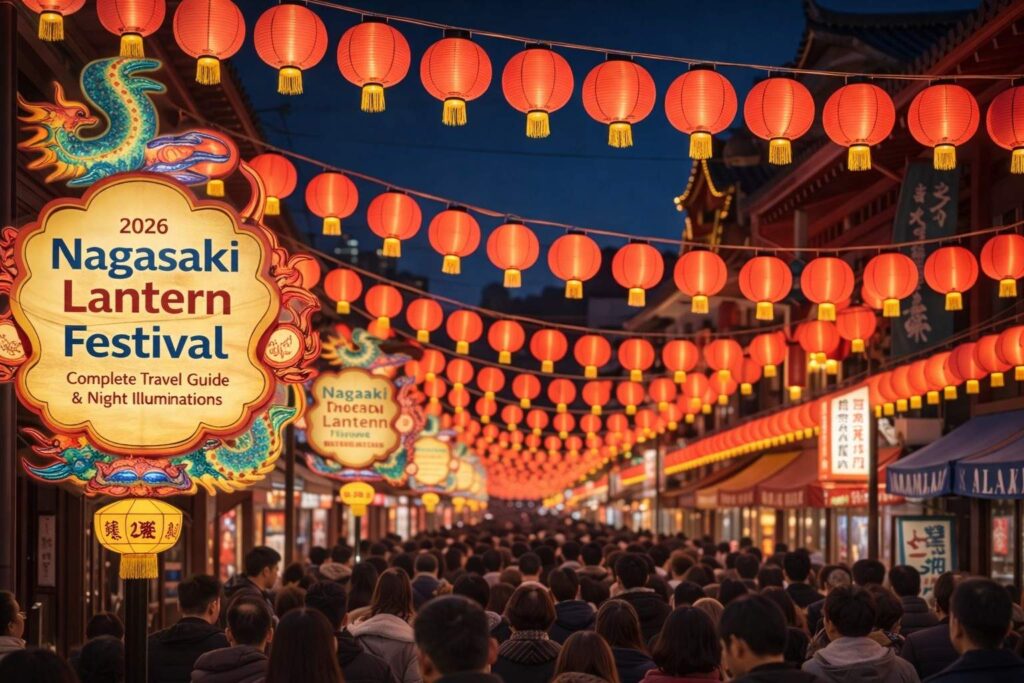
Every winter Nagasaki transforms into a city of light for the Nagasaki Lantern Festival, a vibrant celebration rooted in Shinchi Chinatown’s Chinese New Year traditions. Over 15,000 colorful lanterns and large illuminated art objects bathe the streets, riverbanks and parks — creating spectacular nightscapes that attract visitors from across Japan and overseas. This guide covers everything you need to know: exact dates, top events (dragon & lion dances, Emperor’s Parade, Mazu procession), the best places to photograph the lanterns, and practical travel tips.
When & Where (quick)
- Dates (2026): February 6 – February 23, 2026 (18 days). The festival’s official light-up and opening ceremony typically begins the first day in the evening.
- Light-up hours: Most lantern displays are lit from late afternoon into the night (example light-up often at ~17:00–22:00; grand lighting ceremonies are held on opening day).
- Main venues: Shinchi Chinatown (center of activity), Chūō Park, Minato Park, Nakajima River / Meganebashi (Spectacles Bridge), Hamanomachi & Kanko-dori arcade — lanterns and events are spread through the city center.
Quick Facts (At-a-glance)
Dates & Hours
The Nagasaki Lantern Festival 2026 runs for 18 days: February 6 – February 23, 2026. The festival centers on the Chinese New Year period and each evening the city is lit by thousands of lanterns — the official lighting ceremony on opening day typically has a synchronized “all lights on” moment (often around 18:00), and many displays stay illuminated into the night (commonly about 17:00–22:00). These are the core Nagasaki Lantern Festival dates visitors plan around, so if you’re booking travel or accommodation for the Nagasaki Lantern Festival Japan experience, aim for the first weekend or the lighting ceremony for the fullest atmosphere.
Main Venues (Shinchi Chinatown, Chūō Park, Minato Park, Megane Bridge)
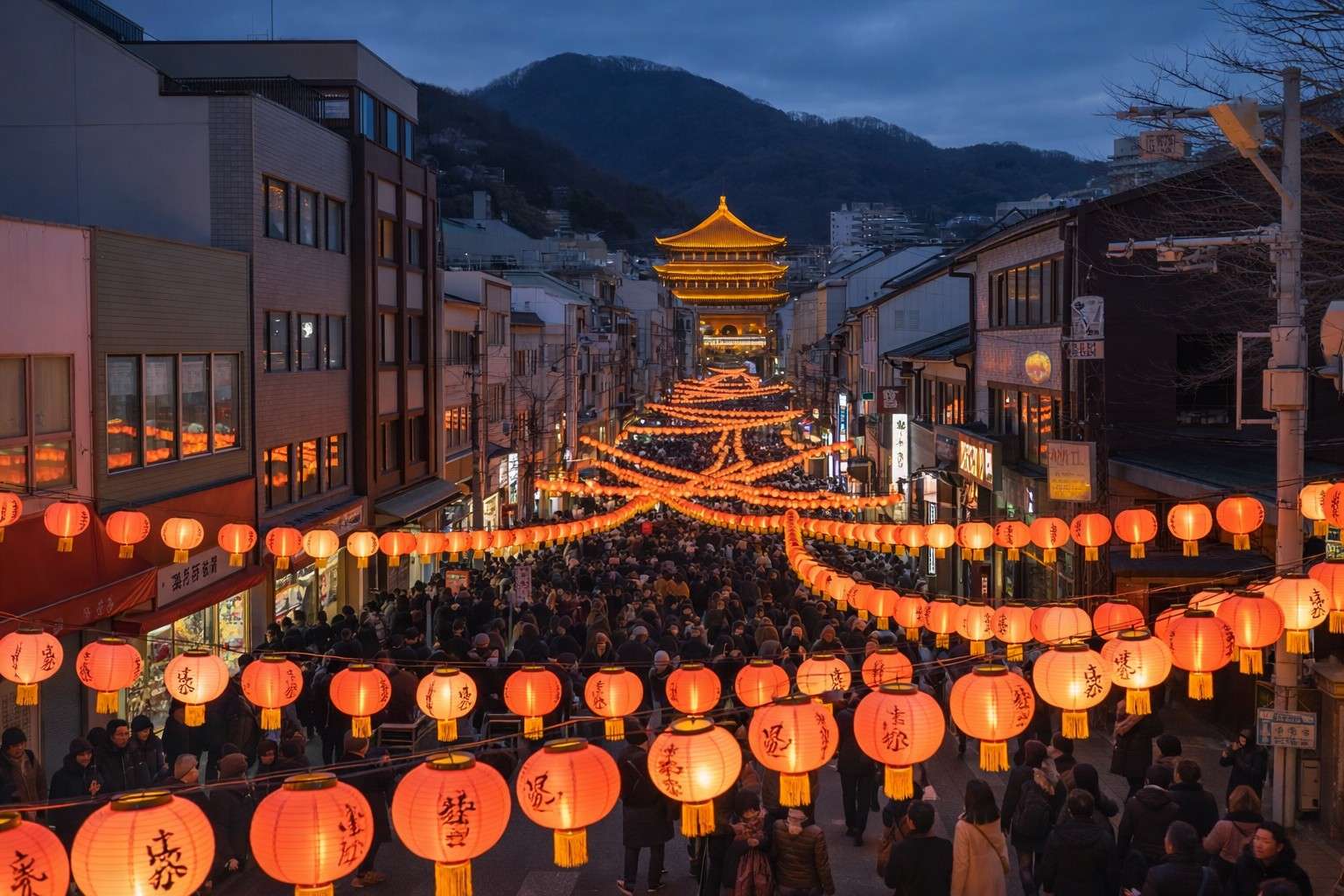
The heart of the event is Shinchi Chinatown, where most of the Nagasaki Lantern Festival Chinatown displays, food stalls, and street performances concentrate — think rows of lanterns, giant zodiac sculptures, and lion/dragon dances. From there, lantern installations spread across nearby hubs: Chūō Park (family events and stage shows), Minato Park (riverside displays and larger installations), and the scenic Nakajima River / Meganebashi (Spectacles Bridge) area — famed for beautiful lantern reflections on the water at night. Walking between these venues is part of the charm: you’ll move from crowded Chinatown alleys to quieter, photogenic bridges and park spaces where the Nagasaki Lantern Festival lights really show off.
Expected Crowds & Best Time to Visit
Expect busy evenings, especially the opening days, national holidays, and weekend nights — the festival draws both domestic and international visitors hunting for that perfect night-shot. Popular sources report roughly 15,000 lanterns illuminating the cityscape, which makes the most-trafficked areas quite crowded after sunset. If you want the lantern spectacle with fewer shoulder-to-shoulder moments, plan for a weekday visit (early in the festival week is often quieter) or arrive before sunset and wander nearby parks like Minato Park and Chūō Park first, then drift back toward Shinchi Chinatown after the initial rush. For a classic itinerary choice — and to answer “Best time to visit Nagasaki Lantern Festival?” — go for weekday evenings during the festival or the lighting ceremony if you crave energy and spectacle; otherwise pick a midweek night to enjoy the Japan lantern festival winter ambiance with more breathing room. Dress warmly (it’s winter), book accommodation early, and allow extra time for trams or taxis.
What Is the Nagasaki Lantern Festival? (History & Meaning)
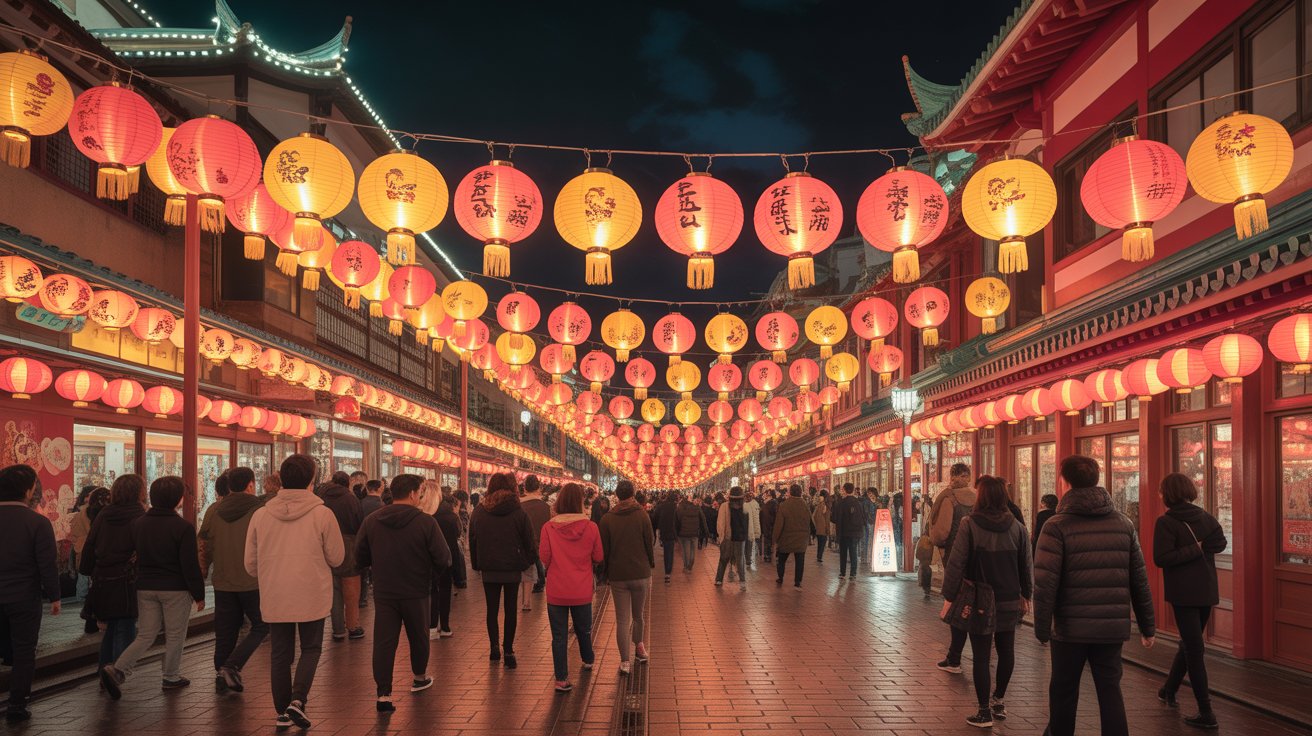
Origins in Shinchi Chinatown and Chinese New Year traditions
The Nagasaki Lantern Festival began as a warm, community-led celebration in Shinchi Chinatown, created by Nagasaki’s Chinese residents to mark the Chinese New Year (the Lunar New Year). What started as lanterns hung along Chinatown streets and small neighborhood ceremonies grew from century-old ties between Nagasaki and Chinese merchants — the city was one of the few open ports during the Edo period, so Chinese culture and rituals took deep root here.
Many of the festival’s signature elements — dragon and lion dances, large zodiac lanterns, and the Mazu procession that honors the sea goddess long venerated by Chinese sailors — come directly from these Chinese New Year traditions. The community originally used these performances and lanterns both to pray for good fortune and to reinvigorate the Shinchi neighborhood, and those same rituals are now the emotional core of the Nagasaki Lantern Festival Chinatown events that visitors flock to each winter.
How the festival grew into Nagasaki’s major winter event
From modest, local beginnings the celebration expanded steadily: in the 1990s the city and tourism groups formalized support for the event, boosting its scale and turning the neighborhood lighting into a citywide spectacle. Since then the Nagasaki Lantern Festival Japan offering has been amplified with thousands of lanterns, staged performances, and coordinated venue programming across parks and riverfronts — transforming a Chinatown springtime custom into one of Nagasaki’s signature Japan lantern festival winter attractions.
Today the festival functions on two levels: it’s a living expression of the Chinese community’s heritage in Nagasaki and a major winter visitor draw. That dual nature — intimate cultural practice made public celebration — is why the event now ranks among the most photographed and talked-about seasonal festivals in the city, with lantern-strewn streets, parades and the Mazu procession creating the dramatic, lantern-lit nights people expect from the Nagasaki Lantern Festival.
Top Highlights & Events
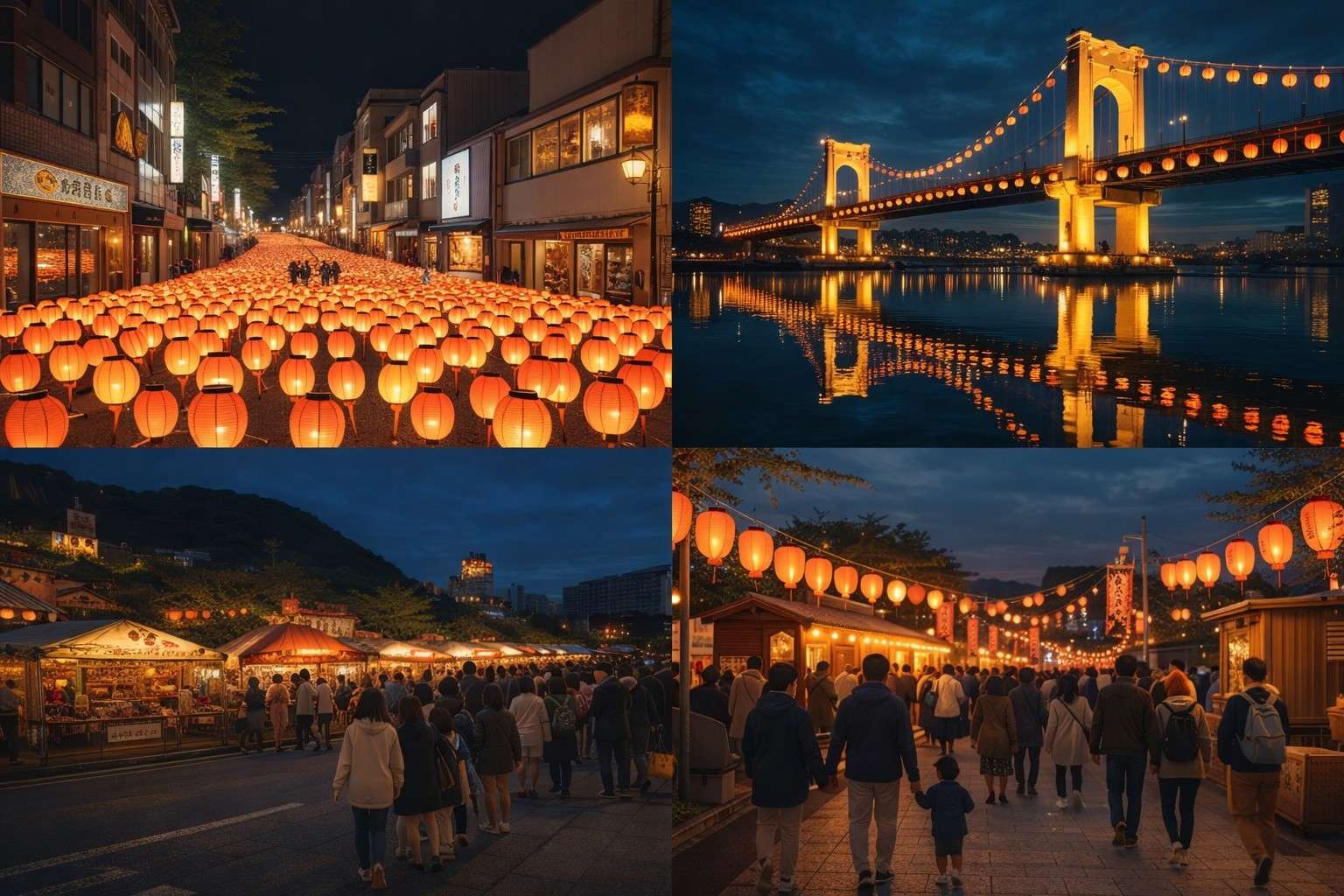
Lantern displays: 15,000+ lanterns across the city
One of the most magical parts of the Nagasaki Lantern Festival is the sheer number of lanterns — over 15,000 lanterns are strung up across the city, from Shinchi Chinatown and Minato Park to Chūō Park, Hamamachi Arcade and even around Megane Bridge (Spectacles Bridge). These aren’t just ordinary lights: many are intricately shaped like animals from the Chinese zodiac, mythical creatures, and grandeur-sized art objects, turning the city into a luminous wonderland at night. Wandering the streets under these glowing lanterns is one of the most iconic experiences of the Nagasaki Lantern Festival Japan, especially after sunset when the colors reflect off canals and stone paths, inviting visitors to pause, photograph, and soak in the warm festival glow.
Dragon and lion dances, erhu & stage performances
Amid the lantern displays, cultural performances bring the festival to life. Traditional dragon and lion dances — vibrant spectacles with long, moving figures and rhythmic drumming — are featured daily throughout the festival, delighting crowds and echoing centuries-old Chinese New Year customs. Alongside these, you’ll find other stage performances such as erhu concerts (a traditional two-stringed Chinese instrument with haunting, expressive tones), Chinese acrobatics, mask-changing acts, and theatrical showcases that celebrate the richness of Japan lantern festival winter entertainment. These lively performances aren’t just pretty to watch — they connect visitors with the deeper cultural roots of the event and elevate the Nagasaki Lantern Festival from a visual feast into a complete sensory experience.
Emperor’s Parade, Mazu procession, and special weekend events
Beyond lanterns and dance, the Nagasaki Lantern Festival features standout cultural highlights that make it much more than just an illuminated street festival. The Emperor’s Parade is a grand, daytime spectacle where costumed participants reenact a Qing Dynasty–era procession, complete with emperor and empress palanquins and vibrant flags — a living pageant of history and color. The Mazu procession honors the sea goddess Mazu, revered by Chinese sailors centuries ago, with a traditional parade route that links historic temples and city parks. In addition to these marquee events, there are often special weekend activities and participatory experiences — such as lantern-making corners or guided cultural tours — that give visitors a deeper connection to the traditions celebrated in this unique fusion of Chinese heritage and Japanese winter festival culture.
Where to Go (Venue-by-venue guide)
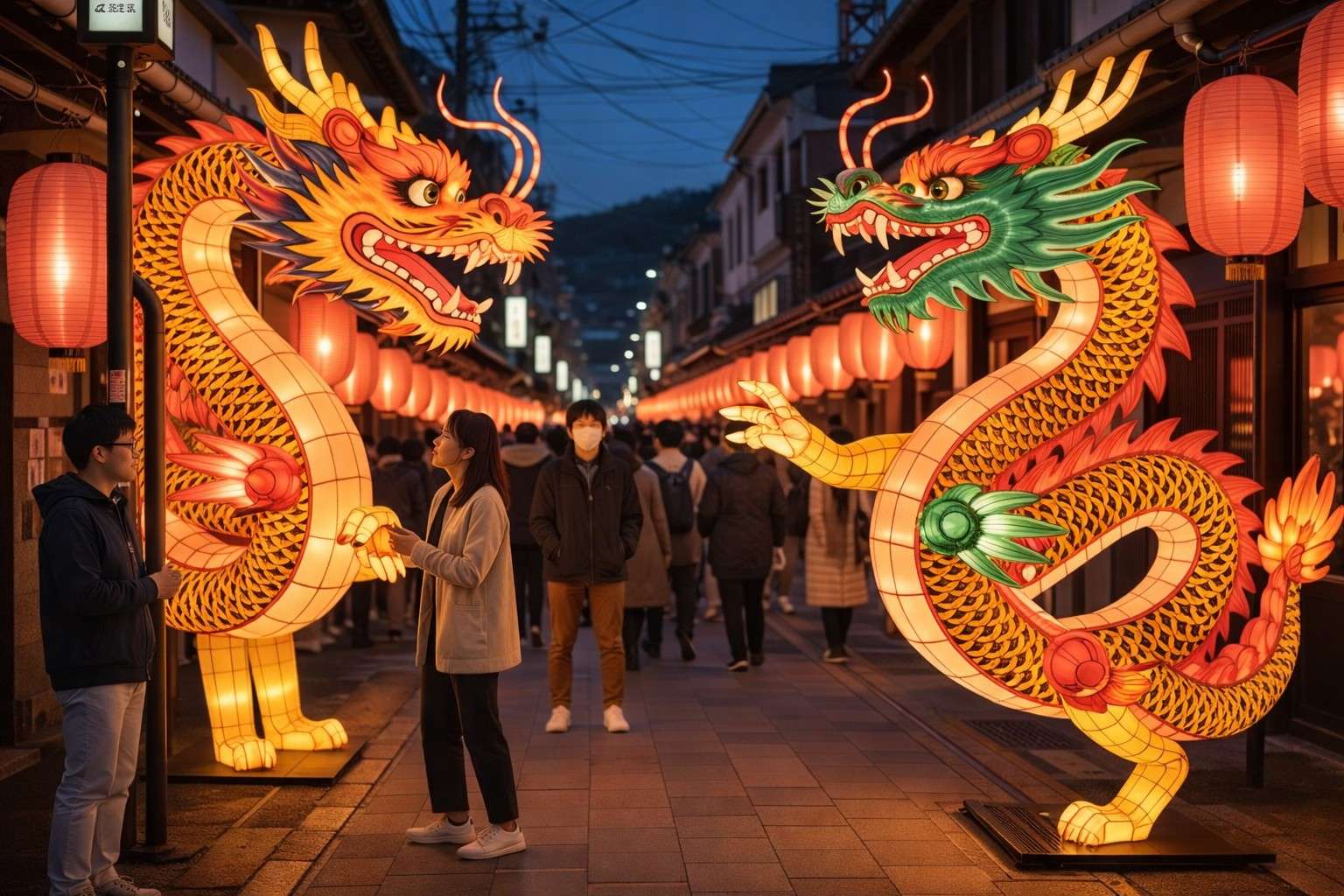
Shinchi Chinatown — main illumination & photo spots
Shinchi Chinatown is the pulsating heart of the Nagasaki Lantern Festival, and for good reason — this historic area becomes the epicenter of the city’s nocturnal transformation. Originally a vibrant ethnic enclave in Nagasaki, Shinchi Chinatown’s streets and nearby Minato Park light up with thousands of glowing lanterns, making it one of the best places to soak up the Nagasaki Lantern Festival Japan atmosphere after sunset.
Here, you’ll find some of the festival’s most dramatic displays and Nagasaki Lantern Festival lights — huge lantern objects, colorful strings overhead, and intricate photo spots right along the main pedestrian streets. Because it’s the premier venue, crowds are often heaviest here in the early evenings, but the payoff is exceptional night photography with lanterns framing your shots at nearly every turn.
Meganebashi / Nakajima River — scenic lantern reflections
Just a short walk from the bustle of Chinatown, the Meganebashi area along the Nakajima River offers a calmer, more picturesque side of the Nagasaki Lantern Festival. Locals and visitors alike love this stretch for its scenic lantern reflections — during the festival, countless Chinese lanterns and smaller fixtures drape the riverbanks, their lights dancing on the water’s surface as dusk deepens into night.
This makes Meganebashi one of the most magical spots to pause and absorb the glow, especially if you’re chasing that perfect shot of lanterns mirrored in rippling water. Though not as crowded as Shinchi Chinatown, it’s a must-visit for anyone wanting to see how the Nagasaki Lantern Festival lights play with natural scenery and city architecture.
Chūō Park / Minato Park — family events & food stalls
For a more relaxed and family-friendly experience during the Nagasaki Lantern Festival, Chūō Park and Minato Park are fantastic options. Both parks are dotted with lantern installations that bring a softer, more open-air feel to the festival. Kids and adults alike enjoy strolling under luminous archways and exploring all angles of the festival’s decorative displays without the tighter crowd flow of Shinchi Chinatown.
These venues also host a variety of food stalls, offering local favorites and seasonal treats that enrich the Nagasaki Lantern Festival Japan experience from more than just a visual perspective. Between bites of festival snacks and pauses for photos under glowing lanterns, Chūō Park and Minato Park are ideal stops for travelers who want to experience the warm community vibe and take a breather between photo hot spots.
Practical Travel Tips
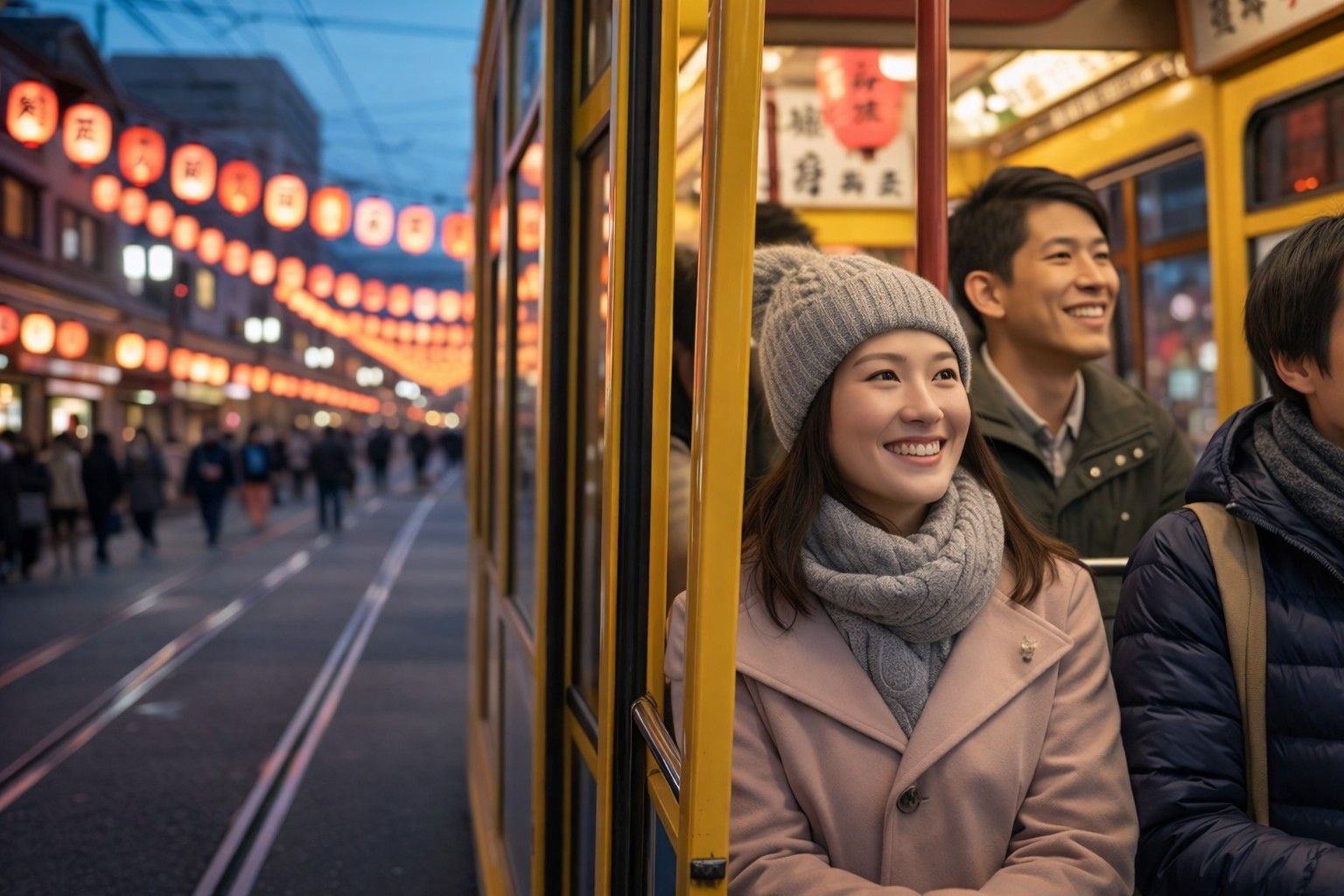
How to get there (train, tram, bus)
Reaching the Nagasaki Lantern Festival is relatively easy thanks to Nagasaki Electric Tramway and local buses that connect most parts of the city center to the festival venues. Most visitors begin at JR Nagasaki Station — from there you can either walk, take a tram, or hop on a bus toward Shinchi Chinatown or Minato Park, which are two of the main hubs for the Nagasaki Lantern Festival Japan festivities. The tram is particularly convenient if you want a scenic, stress-free ride; take it to stops like Sofukuji or Shinchi Chinatown and you’ll be just steps away from the glowing lanterns and event areas. Because the lantern displays and Nagasaki Lantern Festival lights are spread across several venues, using public transit helps you see more without worrying about parking or long walks after dark.
Accommodation & when to book
Accommodation fills up fast during the Nagasaki Lantern Festival 2026 — especially in Shinchi Chinatown and nearby downtown districts — because visitors want to be within walking distance of the towering lantern displays and lively street events. It’s highly recommended to book your hotel or guesthouse months in advance, particularly if your trip overlaps with weekends or the opening days of the Nagasaki Lantern Festival Japan. Staying close to the main venues not only cuts down travel time after sunset (when the Nagasaki Lantern Festival lights are most enchanting) but also lets you return to your room easily after busy evenings of exploration. Securing your accommodation early ensures you won’t miss out on the full experience simply because rooms are sold out.
What to wear (winter essentials) and crowd tips
Although the Nagasaki Lantern Festival feels magical after dark, it takes place in winter, so temperatures in Nagasaki can be quite chilly, especially at night when you’re out enjoying the lantern scenery and street performances. Dress in layers with a warm coat, hat, scarf, gloves, and comfortable shoes — warm socks and boots help, since you’ll likely be walking between venues and through crowds. Many local visitors also use small hand warmers (“kairo”) that stick inside your coat pockets for extra warmth during long evenings of photography or festival wandering. Expect larger crowds in Shinchi Chinatown and around major lantern installations after sunset; arriving a little earlier in the evening helps you secure better viewing spots and gives you a chance to enjoy Nagasaki Lantern Festival lights without feeling rushed. Weekday evenings tend to be less crowded than weekends, if you’re aiming for a slightly quieter experience.
Photography & Social Media Tips
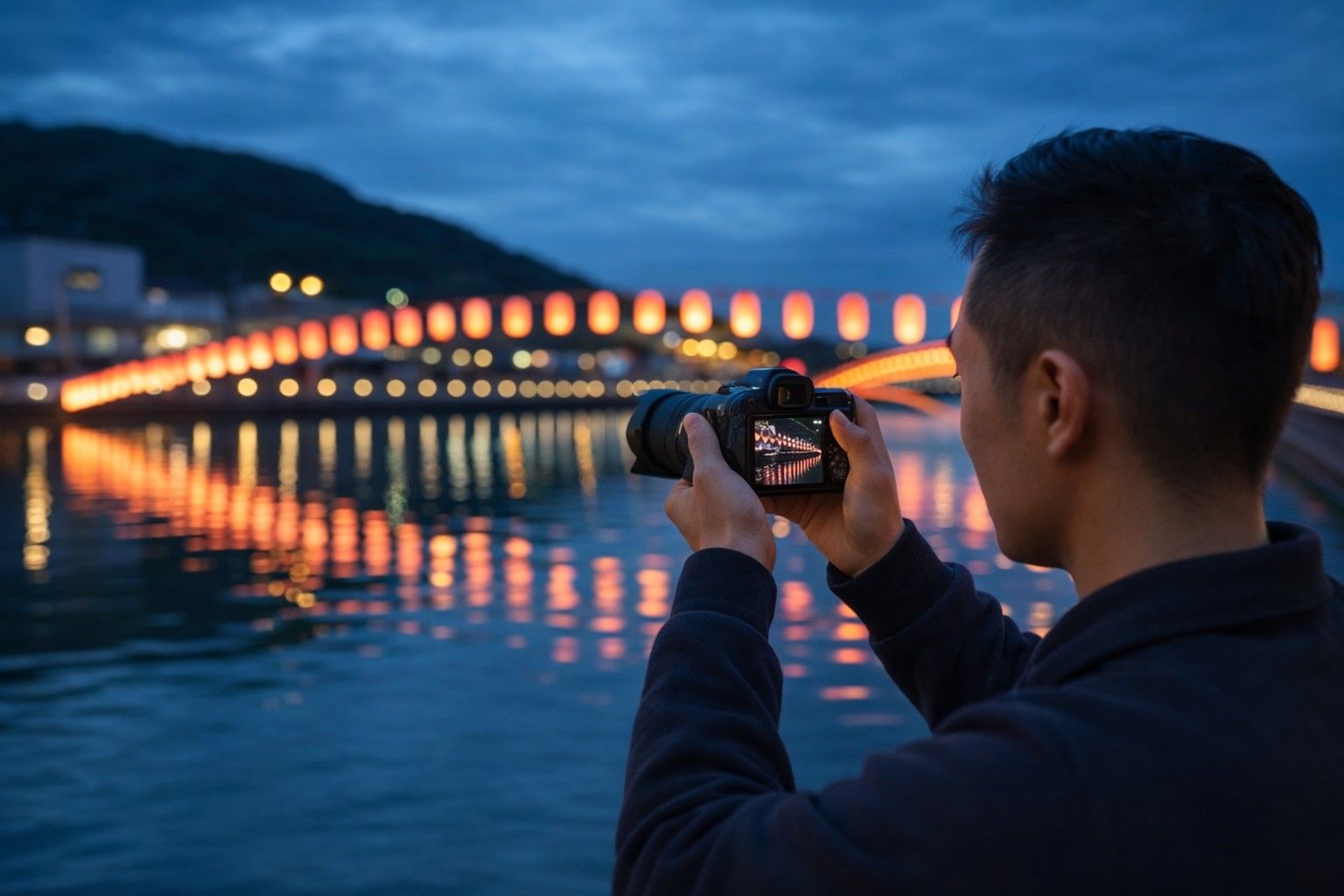
Best times for night photography
For many visitors, capturing the glow of the Nagasaki Lantern Festival is a highlight of the trip — and timing makes all the difference. The lanterns, including the 15,000+ lanterns across the city, are officially lit from about 17:00 to 22:00 during the festival period, with an opening lighting ceremony often around 18:00, so planning your photography around dusk and early night is key to great shots.
Photographers often arrive just before sunset so they can capture that rich golden hour light before it transitions into the vibrant hues of the Nagasaki Lantern Festival lights in full glow. Once the lanterns illuminate — whether in Shinchi Chinatown, along the riverbanks near Megane Bridge, or around Minato Park — the contrast between the deep blue of the evening sky and the warm lantern colors makes for compelling night photography. Locals and returning visitors also recommend scouting a few prime vantage points earlier in the day so you’re ready when the light changes; walking routes that link Chūō Park with riverside spots often give layered compositions of lantern reflections and crowd energy.
Recommended Instagram reels & hashtag suggestions
If you’re planning Instagram reels or TikTok clips, think in terms of storytelling — start with quick clips of the Nagasaki Lantern Festival Japan setting up at dusk, transition to wide shots of the lantern displays, and include close-ups of details like lantern decorations or reflections on water near Meganebashi. Candid moments of dragon dances or crowds enjoying food stalls at Chūō Park / Minato Park add life to short clips and make the content feel authentic rather than staged. Including night time motion — like people walking through glowing arches of lanterns — gives your reel energy and helps evoke the festival’s dreamlike atmosphere.
For hashtags, use a mix of broad discovery tags and festival-specific ones. Examples that work naturally with posts about the Nagasaki Lantern Festival include:
#NagasakiLanternFestival
#JapanLanternFestival
#NagasakiLights
#長崎ランタンフェスティバル
#VisitNagasaki
#WinterInJapan
#FestivalOfLights
FAQs
What are the Nagasaki Lantern Festival dates in 2026?
The Nagasaki Lantern Festival 2026 runs from February 6 to February 23, 2026, spanning 18 days of lights, performances, parades, and cultural events across the city. Visitors planning their trip around these Nagasaki Lantern Festival dates can expect lantern displays and entertainment each evening, with the opening lighting ceremony usually starting around early evening on February 6.
Is there an entry fee for the Nagasaki Lantern Festival?
No — walking around the city to see the lantern displays is generally free, especially in areas like Shinchi Chinatown, Minato Park, Chūō Park and the streets decorated with thousands of lights. However, some paid attractions within festival zones, such as temples or specific exhibits, may charge a separate admission fee (for example, certain temple exhibits can have individual fees).
Where are the best photo spots at the Nagasaki Lantern Festival?
Some of the most Instagram-worthy photo spots during the Nagasaki Lantern Festival Japan include:
- Shinchi Chinatown — vibrant lantern strings and large lantern objects make striking backdrops.
- Meganebashi / Nakajima River — reflections of lanterns on water create a dreamy scene at dusk.
- Minato Park & Chūō Park — colorful lanterns framed by open sky are perfect for wide shots.
These spots come alive after sunset when the lantern lights glow brightest, making them ideal for night photography.
What time do the lanterns light up each day?
During the festival, most lanterns are illuminated from about 17:00 to 22:00 daily, with the grand lighting on the first evening usually around 18:00. On some days at Shinchi Chinatown and nearby venues, lanterns may be lit even earlier in the afternoon.
Can I enjoy the festival during the day?
Yes! While the Nagasaki Lantern Festival is best known for its dazzling night displays, many decorations, cultural performances, parades (like the Emperor’s Parade and Mazu procession), and food stalls are active during daytime hours too. This gives visitors more chances to explore festival zones and enjoy Nagasaki Lantern Festival Japan both day and night.
If you want to learn more about world’s festivals, you can explore here.dionfest