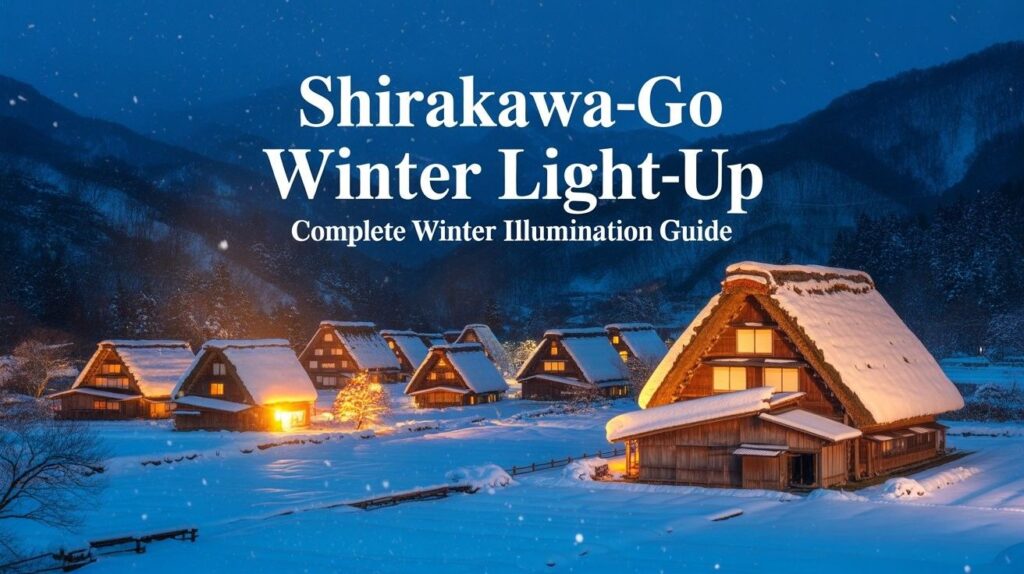
A quiet village blanketed in snow, traditional houses glowing softly in the night—Shirakawago Winter Light-Up is one of Japan’s most magical winter experiences. During this special event, the gassho-zukuri farmhouses of Shirakawa-go are illuminated against the white snow, transforming the entire village into a real-life winter fairytale. For travelers and photographers, this rare event offers a unique chance to witness a UNESCO heritage village glowing in the heart of winter.
Quick Facts About Shirakawago Winter Light-Up
| Detail | Information |
|---|---|
| Event Name | Shirakawago Winter Light-Up |
| Location | Shirakawa-go, Gifu Prefecture, Japan |
| Main Attraction | Illuminated gassho-zukuri farmhouses |
| Event Time | January to early February |
| Duration | Limited nights (usually 4–6 evenings) |
| Main Highlights | Snow-covered village, night illumination, photography |
What Is the Shirakawago Winter Light-Up?
The Shirakawago Winter Light-Up is a short, highly controlled winter illumination event when the traditional gassho-zukuri farmhouses of Ogimachi (the main village at Shirakawa-go) are lit from within and around, turning the snow-covered settlement into a glowing, fairy-tale scene. Locals and authorities set up special lighting and limited public access so visitors can experience the village after dark while preserving the quiet, historic atmosphere. The event is popularly called the Shirakawago (or Shirakawa-go) winter light up or Shirakawago winter illumination event.
Overview of Shirakawa-go winter illumination
The winter illumination usually takes place on a few selected evenings in January and sometimes early February. On light-up nights, interior lamps and exterior floodlights highlight the steep, thatched gassho roofs and wooden facades, while designated observation points (such as the Shiroyama observatory) give sweeping night views of the village. Because access is limited on these nights, entry often requires advance reservation or an authorized bus/tour; organizers do this to control crowds and protect the village’s fabric. The visual effect—warm orange light against deep white snow—is exactly why the Shirakawago snow light up draws photographers and travelers from across Japan and abroad.
History of the winter light-up event
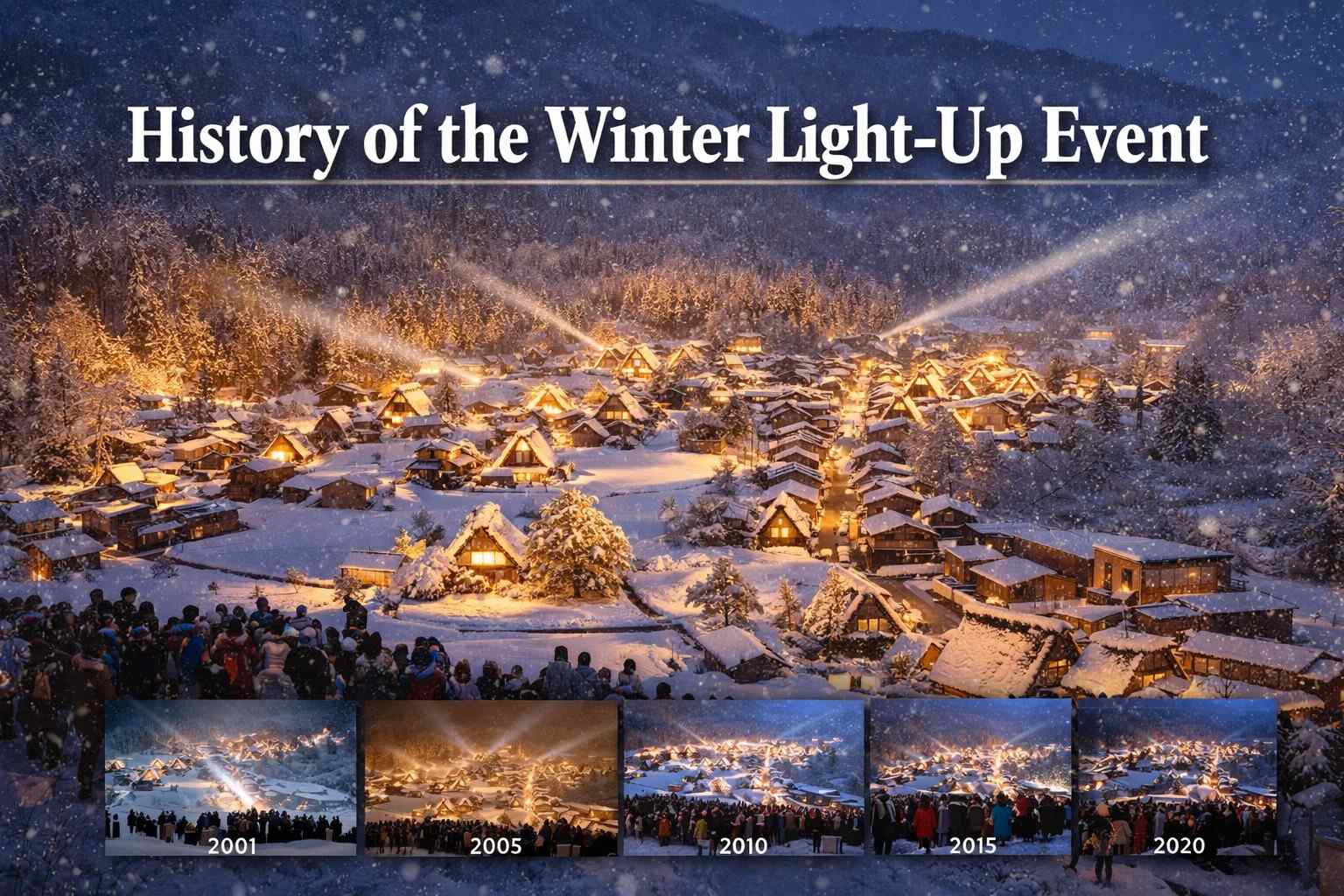
The light-up began as a local initiative to showcase the unique gassho-zukuri architecture and to attract visitors in winter—over the years it grew into a signature seasonal event for the UNESCO World Heritage village. Since Shirakawa-go’s inscription (together with Gokayama) as a UNESCO World Heritage Site in 1995, visitor interest and formal management of the light-ups have increased; in recent years the organizers introduced strict entry controls and reservation systems to balance tourism with preservation. Today the event is run only on a handful of nights each winter to protect the houses, minimize environmental impact, and keep the experience special.
Why Shirakawago looks magical in snow
Several factors create the fairytale-like atmosphere:
- Steep gassho-style roofs hold thick layers of snow
- The valley location receives heavy winter snowfall
- Warm interior lights contrast with the white snow
- Traditional wooden houses enhance the historic feel
This combination creates the iconic glowing winter village scene.
Shirakawago Winter Light-Up Dates & Schedule
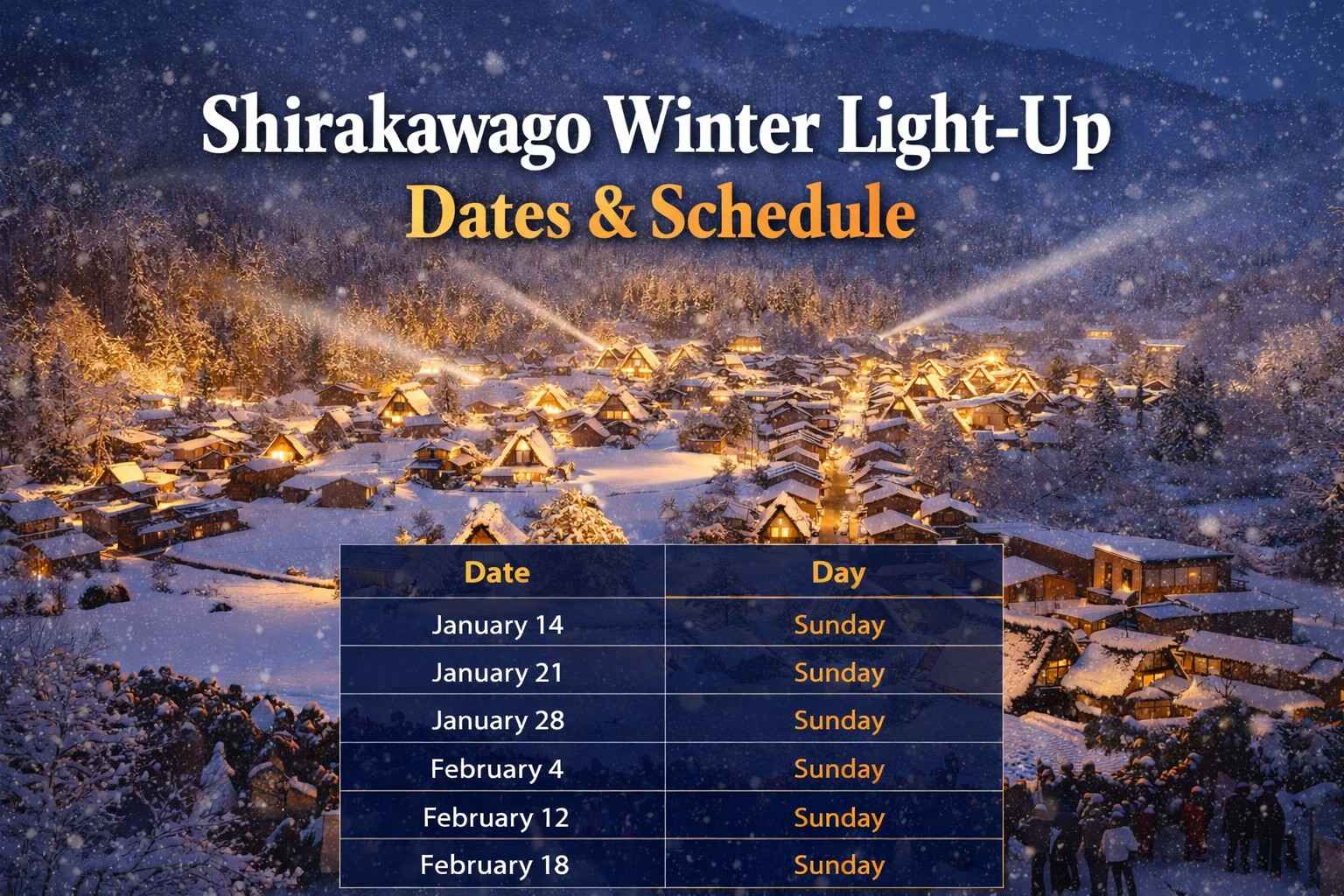
Official Winter Light-Up Dates
The Shirakawago Winter Light-Up is held on just a handful of nights each year, normally in January and occasionally into early February. For 2026 the official event dates are January 12, January 18, January 25 and February 1 — four limited evenings when the Ogimachi village is opened for the illumination. These special dates are announced in advance by the Shirakawa-go Tourist Association and tickets/reservations are required for entry on light-up nights.
Event months and typical weekends
Historically the light-ups are concentrated in mid–late January (weekends are favored), with one date sometimes falling on a public holiday or weekday depending on the year. Organizers keep the number of light-up nights small on purpose — both to protect the UNESCO village and to keep the experience exclusive — so expect the schedule to follow the same January/early-February pattern each winter.
How many nights the illumination happens
In recent years the event has been limited to four nights only; that format is used for the 2026 season as well. Because the dates are rare and fixed, advance planning (bookings for buses, tours or observation-deck access) is strongly recommended if you want to attend on one of the light-up evenings.
Winter Illumination Timings
Typical viewing hours:
- Around 5:30 PM to 7:30 PM
Best time for photography:
- Arrive 60–90 minutes before lights turn on
- Capture blue-hour shots before full illumination
- Stay until later for fewer crowds
For photography, plan to arrive well before 5:30 PM. If you want a clear view from popular spots (especially the Shiroyama/observation deck), arrive at least 60–90 minutes early — that gives you time to claim a spot, set up a tripod, and catch the subtle pre-lighting ambience as dusk falls. If your plan includes the official observatory-deck access, use that — it offers the classic wide night view of the whole village and greatly improves your chances of unobstructed photos (note: observatory access is limited and often sold as part of tours). Finally, avoid the absolute peak minutes right after lights turn on if you want fewer crowds in your frame; sometimes the best light and cleaner compositions appear 20–30 minutes into the illumination window.
Best Time to Visit Shirakawago in Winter
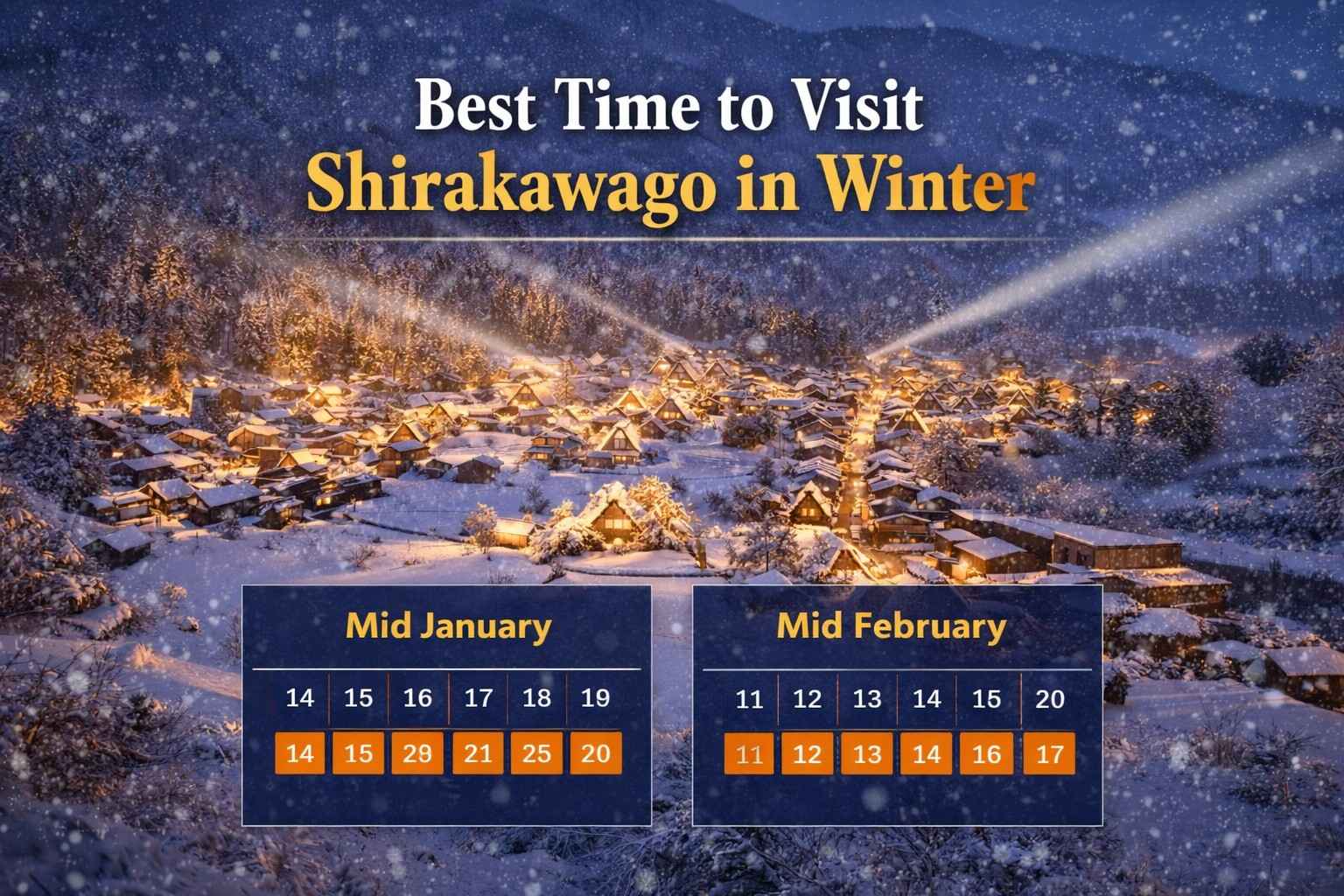
Best Month for Snow & Illumination — January vs February comparison
If your aim is the classic Shirakawago Winter Light-Up look — warm house lights against deep, fresh snow — January is usually the safest bet. January tends to have more consistent snowfall that settles on the steep thatched roofs, giving you the iconic “snow-covered gassho-zukuri houses winter” scene photographers and travelers come for. February can be even deeper snow in some years and feels more wintry and quiet, but weather patterns vary: some winters see heavier storms in late January–early February while others have milder patches. In short: choose January for reliable snowy scenery and the chance to catch early-season illumination nights; pick February if you want deeper snowpack and don’t mind colder conditions.
Snowfall probability
Shirakawa-go sits in a heavy-snow region of central Japan, so the probability of seeing snow in both January and February is high — January often records the most frequent snow days, with February continuing heavy snowfall and deep accumulations. Expect multiple snowy days per month and prepare for wintry road and walking conditions; this is why many visitors planning for the Shirakawago snow light up pack waterproof boots, crampons, and layered thermal clothing.
Weekday vs Weekend Visit — Crowd levels
If you can choose, weekdays are calmer. The Shirakawago light-up nights and the days surrounding them draw large numbers of domestic and international visitors, and weekends — especially the scheduled illumination weekends — are noticeably busier. Official light-up events are deliberately limited to a few selected nights to control crowds, but weekends and holiday dates still attract the biggest groups. For a quieter experience of the village and easier access to viewpoints, aim for a weekday visit when possible.
Weekday vs Weekend Visit — Photography advantages
From a photographer’s perspective, weekdays win again. On a weekday light-up you’re more likely to secure a good position at the Shiroyama observation deck or other prime vantage points without jostling, and tripod setup is simpler. If you must go on a weekend, get there well in advance (often 60–90 minutes before lights) to claim space; alternatively, consider daytime scouting of spots and returning for the illumination. Also, arriving slightly before dusk lets you capture the blue-hour transition — one of the most photogenic moments of the Shirakawago winter illumination.
Shirakawago Winter Travel Guide
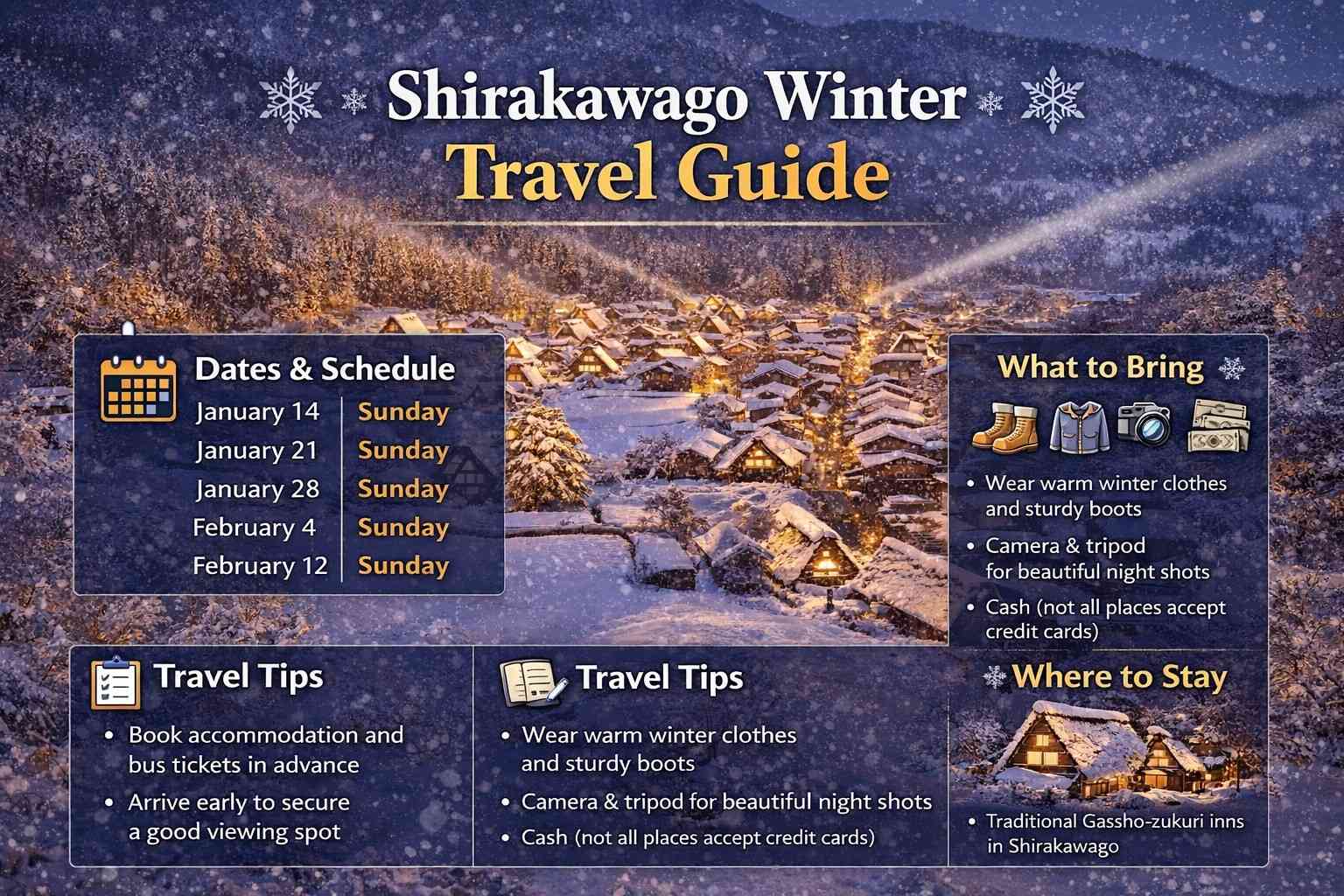
How to Get to Shirakawago in Winter
Visiting Shirakawago in winter — especially if you’re planning to see the Shirakawago Winter Light-Up — starts with getting there from nearby cities like Takayama, Kanazawa, and Nagoya. Because there’s no train service directly into Shirakawa-go, most visitors use highway buses that run year-round. From Takayama, a Nohi Bus will take you to the Shirakawago Bus Terminal in about 50 minutes, making it one of the easiest ways to reach the village. From Kanazawa, direct bus services (run by Hokutetsu and Nohi Bus) bring travelers to Shirakawago in roughly 75 minutes, and these buses are particularly popular among visitors coming from the Hokuriku region. If you’re starting in Nagoya, there’s a convenient direct highway bus that takes most travelers around 2.5 to 3 hours without the hassle of train transfers. Booking bus tickets in advance is strongly recommended in winter, as seats fill up quickly during peak travel periods like the light-up nights.
Winter bus & shuttle information:
During the snowy season, highway buses are the most reliable way to reach Shirakawago winter illumination events because trains don’t go into the village. Buses from these cities run multiple times a day and are equipped for winter travel, but schedules can be affected by weather, so check timetables in advance and allow extra travel time, especially if snowstorms are in the forecast.
Winter Weather & What to Wear
Average winter temperature
- Day: around 0–5°C
- Night: below freezing
Recommended clothing
Insulated winter jacket
Thermal layers
Gloves, scarf, hat
Waterproof boots with good grip
Estimated Daily Budget (for Travelers)
| Expense | Budget Range (USD) |
|---|---|
| Stay per night | $60–$150 |
| Food per day | $15–$30 |
| Local transport | $10–$20 |
| Total daily budget | $85–$200 |
Shirakawago Gassho-Zukuri Houses in Winter
 Snow-covered gassho-zukuri houses — winter experience
Walking through Ogimachi at night during the Shirakawago winter season feels like stepping into a picture-book: the steep, thatched roofs collect and hold heavy snow, while warm interior lights and carefully placed outdoor illumination turn each house into a glowing silhouette against the white landscape. That contrast — soft amber light spilling from wooden windows onto fresh snow — is the heart of the Snow-covered gassho-zukuri houses winter experience, and it’s what draws photographers and travelers who want that quiet, almost cinematic winter scene.
Why these houses are unique
The gassho-zukuri design is built specifically for heavy-snow country: the roofs slope so steeply they resemble hands pressed in prayer (gassho), which helps shed massive snowfall and prevents roof collapse. Inside, multi-story attics were historically used for sericulture (silk-raising), so the houses are unusually tall and roomy for farmhouses — a mix of practical engineering and vernacular craftsmanship you rarely see elsewhere. Their thatch, timber joinery (often crafted without nails), and communal maintenance traditions make these structures both visually distinctive and technically resilient to winter’s weight.
Cultural significance
Beyond looks, the gassho-zukuri houses are living history: Shirakawa-go’s cluster of preserved farmhouses earned UNESCO World Heritage status because they embody a regional way of life shaped by isolation, heavy snow, and cooperative labor (yui) for thatch renewal. In winter the architecture, landscape, and community practices all come together — the seasonal rhythms of roof repairs, fire-prevention patrols, and the continuing use of some houses — showing why the gassho-zukuri houses winter scene is not just beautiful but culturally meaningful. Preservation efforts keep the village authentic while managing tourism, so visitors experience both the visual magic and the deep heritage behind it
Shirakawago UNESCO World Heritage Site in Winter
Why Shirakawago is UNESCO listed
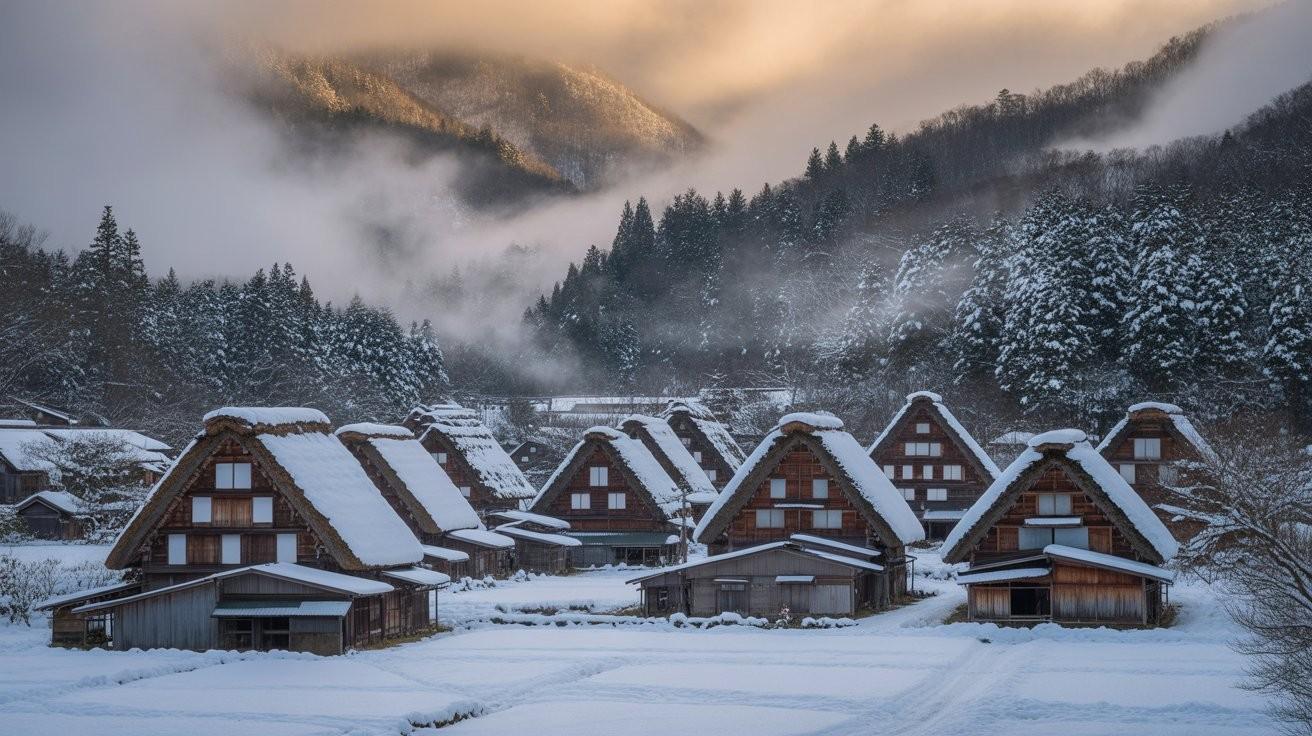
Shirakawago is celebrated as a UNESCO World Heritage Site because it preserves one of the most complete and authentic examples of a traditional mountain settlement shaped by centuries of adaptation to heavy winter snow and remote terrain. The cluster of gassho-zukuri houses — with their steep thatched roofs designed for heavy snowfall — and the cultural landscape around Ogimachi (along with the neighboring villages of Ainokura and Suganuma) show a unique traditional way of life perfectly adapted to the environment and social conditions of the region. This traditional architecture and settlement pattern earned Shirakawago designation alongside Gokayama in 1995, recognized for its outstanding historical and architectural value.
Winter preservation rules
Because the site is both a living village and a UNESCO World Heritage property, visitors must follow strict preservation rules — especially in winter. Local regulations prohibit activities that could damage the delicate thatch of the gassho-zukuri houses or increase risk to these wooden structures, such as open fires, fireworks, and smoking outside designated areas. Fire prevention patrols and community management are carried out year-round, often with extra vigilance in winter, because the dry thatch and heavy snowfall can make preservation more fragile. Respecting these rules not only helps safeguard the village’s heritage but also ensures that Shirakawago remains a genuine cultural site rather than just a tourist attraction.
Responsible tourism tips
Visiting Shirakawago — particularly during the winter illumination season — is a magical experience, but being a responsible traveler makes that experience better for everyone. First, stick to marked paths and observation points so you don’t disturb fragile grounds or private property. Since many gassho-zukuri houses are still inhabited or privately owned, always ask or check signage before entering any building. Pack out what you bring in, support local businesses (shops, inns, and cafés), and avoid loud behavior that disrupts village life. Being mindful of these practices helps protect Shirakawago’s heritage and supports the community that works every day to preserve this UNESCO site for future generations.
Photography Guide – Shirakawago Winter Light-Up Photos
Best Photo Spots in Shirakawago
Shiroyama Viewpoint
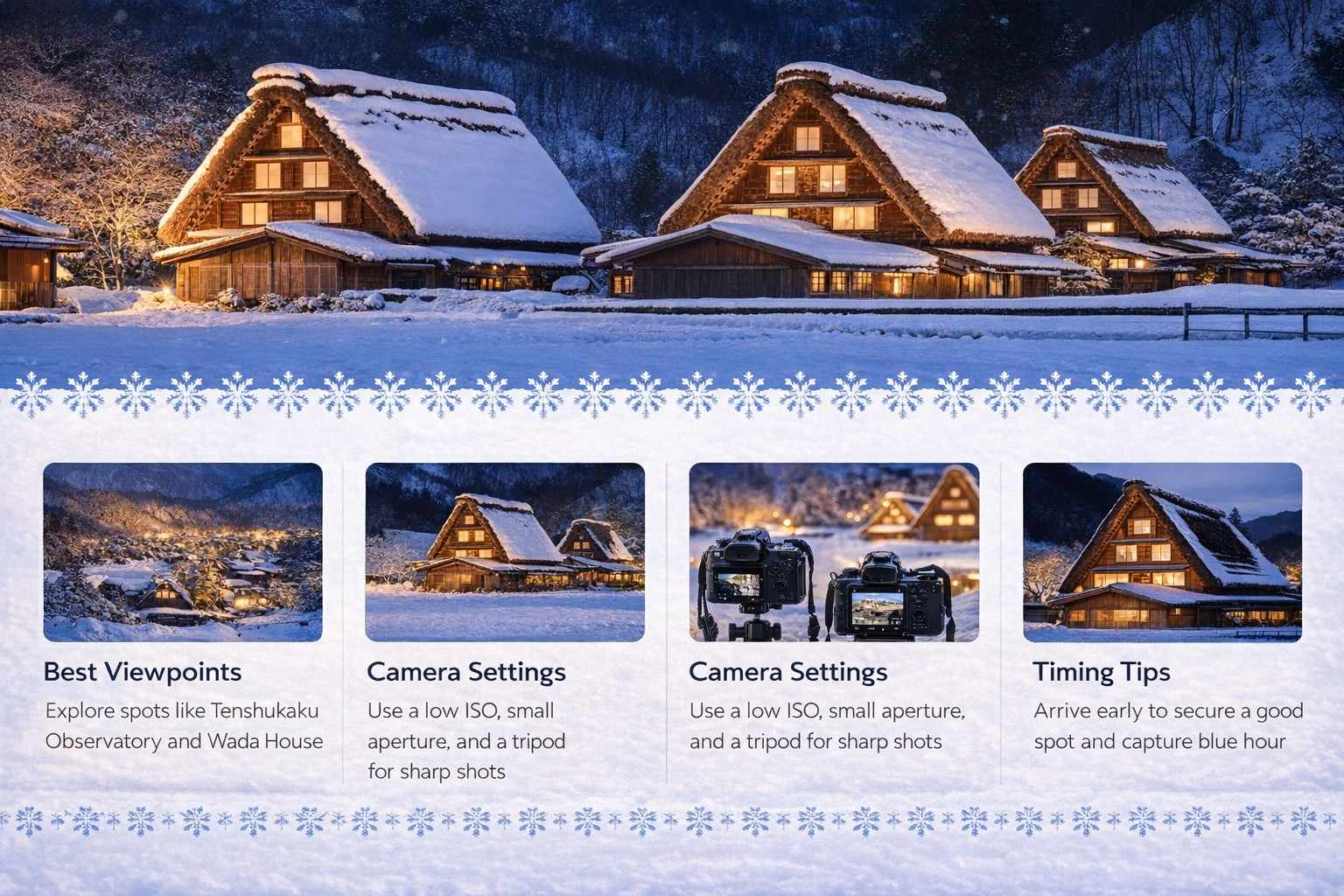
For the classic wide panorama of the illuminated village, the Shiroyama Viewpoint is the go-to spot. From this hilltop vantage you get the sweeping view of the gassho-zukuri roofs, warm interior lights, and the snowy valley that make the Shirakawago Winter Light-Up image everyone recognizes — arrive early (and warm) to claim a clear spot and to shoot through blue hour into the full illumination.
Village streets at night
Don’t only shoot from above — wandering the village streets at night gives intimate frames: glowing windows reflected on fresh snow, lantern-lit lanes, and close-up architectural details of the thatched gassho houses. Walk slowly, respect private property and any restricted zones, and look for compositions that use light spilling from doorways or the contrast between warm house lights and cold snow to tell a story.
Night Photography Tips
Camera settings for snow & light
For clean, sharp Shirakawago winter light up photos at night, use a tripod and shoot RAW. Start in Manual mode with a low ISO (100–400) if you can hold a long exposure; try shutter speeds from 1–30 seconds depending on ambient light and whether you want to capture falling snow as streaks or freeze flakes with a faster speed. Aperture around f/4–f/8 works well for balancing depth of field and lens sharpness; if you need more depth for landscape panoramas, stop down to f/8–f/11. Manual focus (or focus peaking) is helpful in snowy, low-contrast scenes, and bring spare batteries — cold drains power fast. Bracket exposures for insurance and to blend highlights (lit windows) with shadowed snow if necessary.
Mobile photography tips
Smartphones can capture beautiful Shirakawago winter illumination shots if you work with the limitations: use a small travel tripod or stabilize the phone on a surface for longer exposures, enable night mode if available, lock exposure/focus to avoid blown highlights from lit windows, and shoot in RAW (or export HEIF/RAW if your phone supports it) to retain detail for editing. Compose for contrast — warm light against white snow — and try the blue-hour window (shortly after sunset) when the sky still holds color and artificial lights look natural. Finally, keep the phone warm between shots to protect battery life.
Is Shirakawago Winter Light-Up Worth It?
Pros & cons of visiting during light-up
For many travelers, the Shirakawago Winter Light-Up is truly a once-in-a-lifetime experience — seeing the iconic snow-covered village glow at night is unforgettable. On the pros side, you get breathtaking winter scenery, unforgettable photo opportunities, and a chance to experience traditional village life like nowhere else in Japan. The warm lights reflecting off deep snow create magical scenes that make Shirakawago winter illumination famous worldwide.
On the cons side, it’s worth noting that the event is very crowded, access is limited, and the cold can be intense. Because the illumination only happens on a few scheduled nights and requires reservations, planning must be precise — and some visitors find the crowds and logistical complexity a drawback compared to the peaceful daytime visit. (Based on aggregated travel reports and visitor reviews.)
Crowd vs experience comparison
If you prioritize photography and atmosphere, the light-up nights deliver unique value few other winter events can match: the contrast of warm interior light and pristine snow, quiet village streets, and clear night skies. However, many travelers report that crowd levels can be high around the most popular viewing spots, especially near the Shiroyama Viewpoint and observation decks. In comparison, daytime visits offer snow-covered gassho-zukuri houses and scenic beauty with far fewer people around. So if your focus is tranquility and casual exploration, daytime may be more relaxing; but if you’re chasing that iconic night scene, most photographers and winter travelers say it’s worth braving the crowds for the experience. (Based on tour operator notes and travel guides.)
Who should visit (families, couples, photographers)
The Shirakawago Winter Light-Up experience appeals to several types of travelers. Photographers are perhaps the most enthusiastic — the rare light conditions, snowy village, and warm illumination make for stunning images that can’t be replicated easily elsewhere. Couples often choose the event for its romantic, fairytale-like vibes and the chance to explore a UNESCO heritage village lit against snow. Families can also enjoy the visit — but should plan for cold weather, limited child-friendly facilities at night, and potential waiting times near popular spots. If comfort and quiet are priorities, a daytime winter visit or a visit outside illumination nights might suit better; if immersive winter atmosphere and stunning visuals are your goal, the light-up event is worth it for many visitors. (Based on travel forums and winter travel recommendations.)
Tips for Visiting Shirakawago Winter Light-Up
Reservation & ticket tips
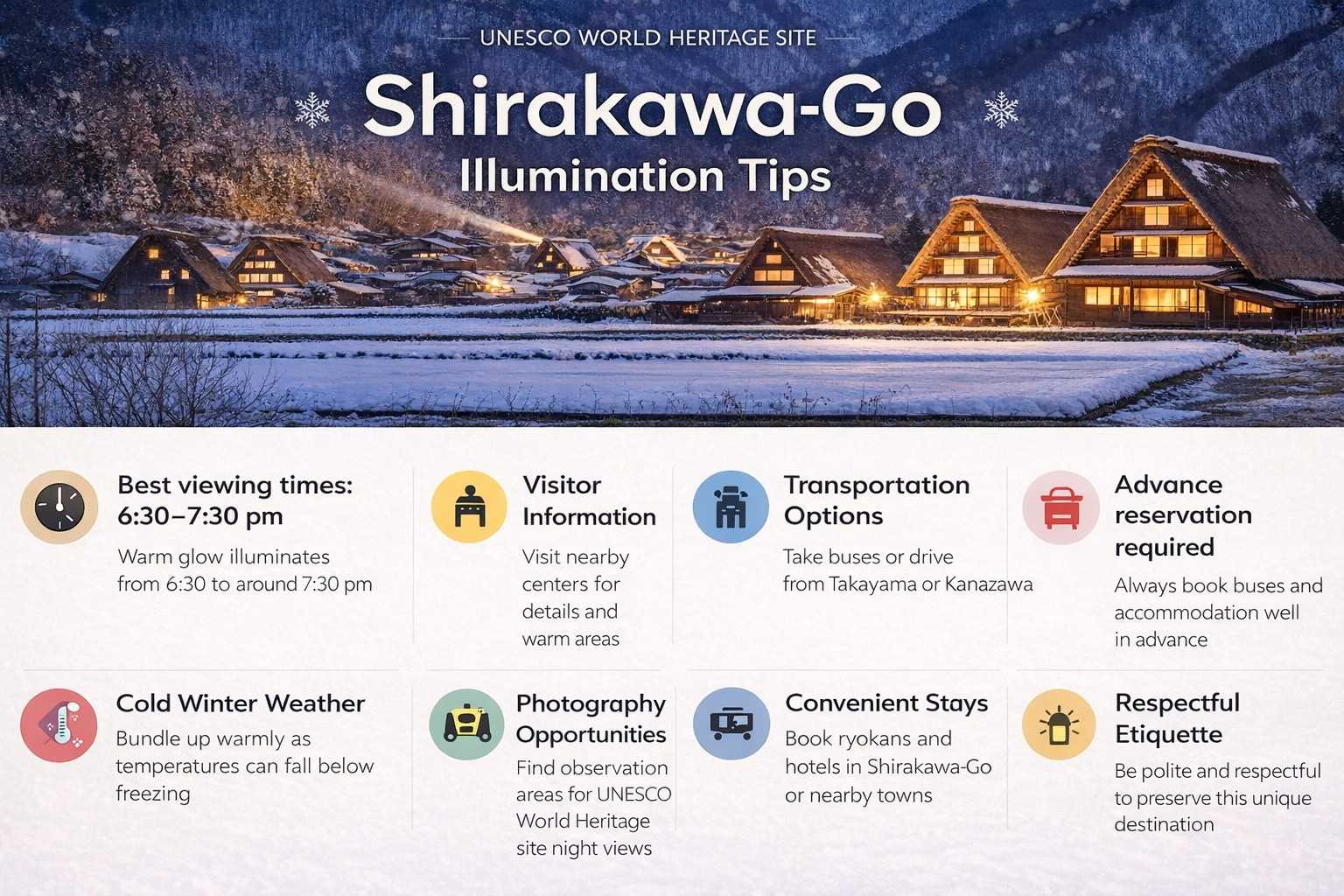
Entry to the Shirakawago Winter Light-Up is strictly controlled: the village is open to visitors on only a few designated nights and advance reservations or tickets are required for those evenings. Book early — observation-deck passes, accommodation packages, and official bus tours often sell out quickly when reservation windows open (and some parts of the event, like the observatory, may be available only to overnight guests or specific tour packages). If you can, reserve directly through the Shirakawa-go Tourist Association site or reputable operators (Nohi Bus, Klook, Willer, etc.), and keep confirmation emails and QR/ticket numbers handy on event night.
Crowd management
Light-up nights are popular and can feel crowded around the Shiroyama Viewpoint and main streets. To avoid the densest crowds, aim for weekday illumination nights if possible, or arrive 60–90 minutes before the lights so you can claim a good viewing spot and set up equipment. Consider booking a tour or bus that includes timed access or an observation-deck ticket (these often manage flow better than self-arrival). If you prefer quieter photos, scout daytime locations and return for the night shoot — or plan to shoot slightly after the lights come on, when the initial surge sometimes eases. And always follow staff directions and rope/line markings: they keep everyone safe and protect the village.
Safety tips in snow
Winter in Shirakawago is cold, icy, and often snowy — dress in warm layers, use waterproof boots with good traction (or attach crampons/cleats if you expect icy paths), and carry spare batteries (cold drains power fast). Walk slowly on snow and ice, keep hands free when negotiating steps, and watch for vehicle movements on narrow roads. If you’re traveling by car, remember road conditions can change rapidly; highways and local roads may require snow tires or chains, and organizers recommend using official shuttle/bus services on light-up nights when parking and traffic are restricted. Finally, keep basic emergency items (phone charger, small first-aid kit, warm hat/gloves) handy — simple preparedness makes the magical Shirakawago winter illumination experience much more comfortable.
Frequently Asked Questions (FAQ)
Do I need a reservation for Shirakawago Winter Light-Up?
Yes — entry to the Shirakawago Winter Light-Up is strictly controlled and advance reservations or tickets are required for the official illumination nights. Organizers limit the number of visitors on light-up evenings to protect the village and manage crowds, so purchase or reserve your spot through the official Shirakawa-go site, authorized bus operators (e.g., Nohi Bus), or verified tour providers well before the event.
Is Shirakawago very crowded during winter light-up?
Yes — the winter illumination draws large numbers of domestic and international visitors, and popular vantage points (especially the Shiroyama/Viewpoint areas and main village streets) can feel crowded on light-up nights. Weekday illumination nights are generally calmer than weekend dates, and arriving 60–90 minutes early or booking timed observation-deck access (when available) will improve your experience.
Can I stay overnight in Shirakawago in winter?
Yes — you can stay overnight in Ogimachi (the main Shirakawa-go village) in winter; there are traditional minshuku (guesthouses), ryokan, and small inns that accept guests year-round. Note that many minshuku have limited room capacity and fill up quickly during the light-up period, so book accommodation early if you plan to combine an overnight stay with the Shirakawago winter illumination. Staying overnight can also give you better access to quieter village hours and, in some cases, special observation-deck privileges.
How cold does Shirakawago get in winter?
Shirakawa-go gets genuinely cold in winter: January is the coldest month with average lows often below freezing (typical ranges show nightly temperatures around −5 to 0 °C and daytime highs near 0–5 °C), and frequent heavy snowfall creates deep drifts on roofs and roads. Dress in warm, layered clothing, waterproof boots with good traction, and carry spare batteries — the cold and snow are part of the magical Shirakawago winter experience but require proper preparation.
Conclusion
Shirakawago Winter Light-Up is a rare and magical winter event that transforms a historic village into a glowing fairytale landscape. With its snow-covered gassho-zukuri houses and peaceful mountain setting, it offers one of Japan’s most memorable seasonal experiences. For travelers seeking culture, photography, and winter beauty, this event is truly unforgettable.
If you want to learn more about world’s festivals, you can explore here.dionfest